• After 15+ years, we've made a big change: Android Forums is now Early Bird Club. Learn more here.

Bloatware... How much is on your phone???

ironass

Extreme Android User
How much, "bloatware", has been added to your phone?

In the thread 35 Galaxy S5 models - know yours??? I talk about unbranded, lightly carrier branded, medium carrier branded and heavily carrier branded but what does it mean?

Today I had occasion to Factory Data Reset my phone and flash the stock, unbranded, Samsung firmware on Lollipop, Android 5.0, for the UK and I took the opportunity of taking some screenshots of the App Drawer, Storage and Running applications on the phone and present them as is.

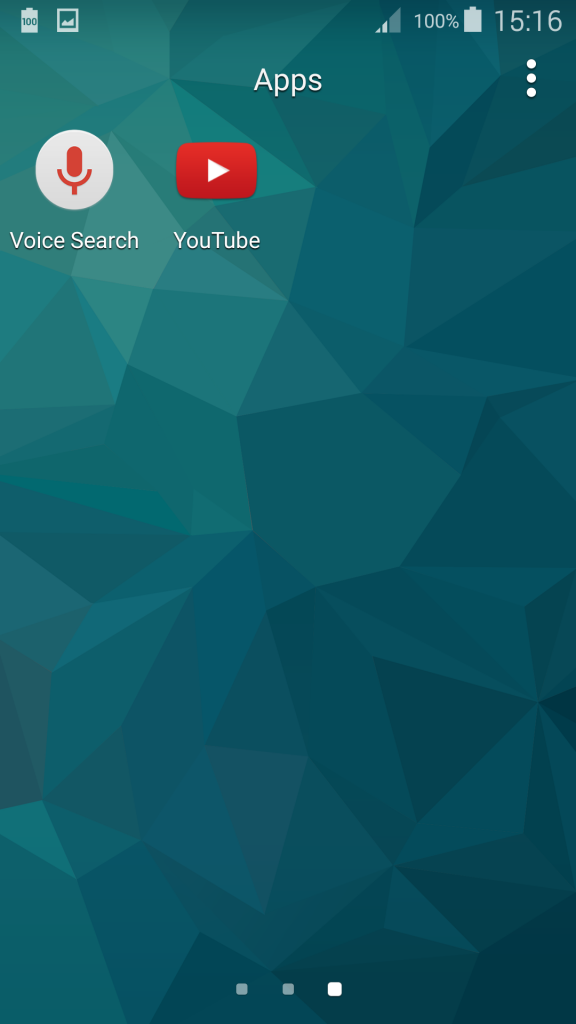
First, we start with the App Drawer which runs to a little over 2 pages and has 42 apps in it from both Google and Samsung as well as DropBox and Flipboard...

Screenshot #1 App Drawer


Screenshot #2 App Drawer


Screenshot #3 App Drawer


The next post covers Storage...
 
Last edited:
Next comes Storage. How much space is your firmware taking up on your device.

Go to... Settings > Storage and you can see how much space is allocated to the System Memory and how much is being used as well as how much Available space you have left,

Screenshot #4 Storage


Screenshot #5 Storage


In the next post I show how much RAM, (Random Access Memory), the System and apps are using on this device.
 
Last edited:
In this post we can see how much RAM, (Random Access Memory), is being used to run both the System and the pre-installed apps as well as how much RAM is free.

Settings > Apps > scroll across to Running

Screenshot #6 RAM usage


Last edited:
To make any comparison meaningful it is important to know the following...

1. The model of Samsung Galaxy S5 that you have. See #1.2 of 35 Galaxy S5 models - know yours??? to obtain this.

2. The Lollipop, Android 5.0, firmware that you are running. See #1.8 of 35 Galaxy S5 models - know yours??? to obtain these 3 lines of information.

3. How many stock apps came with your firmware. I don't expect you to do a Factory Data Reset but you can just count the number of apps in your App Drawer and subtract those you have downloaded yourself.

4. The amount of System Memory, Used Space and Available Space as per Screenshot #5

5.
Last and possibly most importantly, how much RAM is being used by the System. See screenshot #6

You will then end up with this...

Model: SM-G900F

AP: (PDA) G900FXXU1BOA3

CP: (Baseband) G900FXXU1BOA3

CSC: G900FOXA1BOA4

Stock Apps: 42

System Memory: 4.30GB

Available Memory: 9.08GB

System RAM: 324MB

I appreciate that this requires some effort but it may help us to better understand the various firmwares.
 
Last edited:
It looks like the unbranded UK version S5 comes with Dropbox and Flipboard, neither of which are Google or Samsung.

If I get a chance sometime I'll tell you what comes on Chinese S5s.
 
It looks like the unbranded UK version S5 comes with Dropbox and Flipboard, neither of which are Google or Samsung.

You're right mikedt! They do come bundled in the stock Samsung release for the unbranded UK, OA3, Lollipop though. Well spotted!

If I get a chance sometime I'll tell you what comes on Chinese S5s.

Thanks old bean! That would be interesting as would the Verizon Lollipop firmware details if anyone can provide it.
 
I'm still on 4.4.4 so I will only post what I turned OFF.

Amazon
Amazon Appstore
Amazon app suite
Amazon Kindle
Amazon MP3
ANT Radio Service
Ant+ Plugins
Audible
Bubbles
ConfigUpdater
FamilyBaseCompanion
Flipboard
Google Play Games
Hangouts
IMDb
NFL mobile
Polaris Office 5
S Health
Samsung Updates
Slacker
Smart Remote
Softcard
Verizon Accessories
Verizon Cloud
Verizon Message+
Verizon Support & Protection
Verizon Navigator
VZWAVSService

whew! now that is a ton of stuff that never needed to be put on the phone in the first place.... mind you, I cannot uninstall any of this. I just have it turned OFF...

It would be so much more appreciated if our phones came stripped to the naked core and then allow us, the actual user of the device to load onto it only what we want.
____________________________________
2 ea. Verizon Galaxy S5, 4.4.4 forever!, ART
MyPhoneExplorer lets you access a broken phone while locked

Nova Prime, Textra, Blue Mail, Qi wireless equipped
MacroDroid can help extend battery life
MacroDroid senses Screen off, turns Wifi & Data OFF
MacroDroid senses Screen on, turns WiFi & Data ON
 
The Verizon S5 is rather loaded isn't it?

I saw a showroom China Mobile S5 this morning, a branded G9008. There's nothing Google on it which is to be expected here, all the Samsung stuff is there, like Apps, S-planner, S-health, also it did have some carrier stuff, namely CM's "10086.cn" customer service app, CM's own app store, as well as a "China Mobile" branded version of AutoNavi, which is a GPS satnav app. So I didn't think it was too bad. This was 4.4.4 firmware, don't think Samsung have started rolling out 5.0 here yet. The included GPS app, is really the only thing that isn't Samsung or carrier.
 
Last edited:
Model: SM-G900F

AP: (PDA) G900FXXU1BOA3

CP: (Baseband) G900FXXU1BOA3

CSC: G900FO2U1BOA1

Stock Apps: 42? (120 Apps in drawer downloaded 112; is this what is required?)

System Memory: 4.18GB

Available Memory: 6.89GB

System RAM: 564MB
 
The Verizon S5 is rather loaded isn't it?

Even if you remove the 8 stock apps, that leaves 20 extra apps and I'm given to understand that that's not all of them and that the Verizon Lollipop update adds even more, (confirmation needed). It would certainly account for Verizon's need to do a unique 2 stage update. The first was probably to expand the System partition to accommodate all the extra apps and modifications and the 2nd update would be to flash the actual Verizon Lollipop firmware.

Model: SM-G900F

AP: (PDA) G900FXXU1BOA3

CP: (Baseband) G900FXXU1BOA3

CSC: G900FO2U1BOA1

Stock Apps: 42? (120 Apps in drawer downloaded 112; is this what is required?)

System Memory: 4.18GB

Available Memory: 6.89GB

System RAM: 564MB

Thanks athegn!

The phone, on O2 in the UK, would have come with at least...

Samsung
Calculator
Camera
Chrome
Clock
Contacts
Email
Gallery
Internet
Memo
Messages
Music
My Files
Phone
S Health
S Planner
S Voice
Samsung Apps
Settings
Smart Remote
Video
Voice Recorder.

Google Apps
ChatON
Chrome
Drive
GMail
Google
Google Settings
Google+
Hangouts
Maps
Photos
Play Books
Play Games
Play Movies & TV
Play Music
Play Newsstand
Play Store
Voice Search
YouTube

+O2 carrier apps... if any.
 
Not wishing to be left out of the race for, "Who can pile the most bloatware on to a Galaxy S5 firmware update", AT&T used their latest update for Android 4.4.4, to slip in around half a dozen extra apps. See, here.
 
Verizon is going to have to hang their head in shame, they have now been outclassed in the Bloatware department. just think, maybe I should abandon VZW and move over to AT&T just for that neat experience
lash.gif
shock.gif
 
OK... all joking apart, here are some serious questions that I hope someone can give me a non-speculative and definitive answer to...

1. Why are there no unbranded Samsung Galaxy S5 phones available for the U.S.A., Canada and Mexico?

2. I know that AT&T and Verizon lock their bootloaders, are there any other carriers that do so?

3. Why do these carriers insist on locking their bootloaders?

4. Do AT&T and Verizon customers know that their phones have an ersatz carrier version of Samsung's firmware?
 
"4. Do AT&T and Verizon customers know that their phones have an ersatz carrier version of Samsung's firmware?"

Would this be the same for U.S, Cellular?
 
OK... all joking apart, here are some serious questions that I hope someone can give me a non-speculative and definitive answer to...

1. Why are there no unbranded Samsung Galaxy S5 phones available for the U.S.A., Canada and Mexico?

Could be because they didn't expect to sell many? Possibly because of the established way of buying phones in the North America, i.e. subsidized from carriers, few are prepared to pay $600-700 up-front retail for their S5s? The unbranded international variants are available, from places like Expansys or Amazon, but they're not CDMA/EV-DO so no good for Verizon and Sprint.

3. Why do these carriers insist on locking their bootloaders?

Easier for tech support, deters people who don't know what they're doing screwing around with the firmware. Also the kickback from bloat like NFL and NASCAR on carrier subsidized phones, the affiliates and partners don't want customers to be removing it probably.
 
OK... all joking apart, here are some serious questions that I hope someone can give me a non-speculative and definitive answer to...

1. Why are there no unbranded Samsung Galaxy S5 phones available for the U.S.A., Canada and Mexico?

2. I know that AT&T and Verizon lock their bootloaders, are there any other carriers that do so?

3. Why do these carriers insist on locking their bootloaders?

4. Do AT&T and Verizon customers know that their phones have an ersatz carrier version of Samsung's firmware?
1. Unbranded, sim-unlocked phones are available in the USA, you can get them from Amazon, or sometimes, a developer version of the phone. At retail, just like in the UK.

Three problems with that -

a. Usually no CDMA, so no Sprint or Verizon.

b. The USA carriers vary LTE bands - excellent chance of no 4G support.

c. Price. We get deep incentives to buy a subsidized phone if we renew our contracts. I got my HTC One M8 for $36 out the door with tax when it was just two months after release. One of my sons-in-law got his SGS5 for $50 plus tax on a similar sale.

Carrier phones are too attractive to pass up but to straighten them out, root is essential.

2. All bootloaders are locked, including the Nexus. Some are easier to unlock than others. Verizon is the worst offender for modified, difficult to unlock firmware, AT&T is a close second. Sprint couldn't care less.

3. Control, support and money.

a. Control - some carriers simply operate as if you're using their property to get to their network and you ought to be grateful for the opportunity. Escaping a contract is expensive and see #1 for the idea that you'll just take your phone to another carrier.

b. Support - in the USA, Jailbreaking an iPhone is synonymous with getting paid apps for free and the carriers rarely understand the difference between the two systems. In addition people intelligent enough to stay the hell out of C:\Windows\system32 won't think twice about deleting anything in /system thinking that a factory data reset will magically save them. They then post here that critical files were accidentally erased. When they botch directions to fix what they did, they waltz into the carrier stores and demand a warranty replacement.

c. Money - bloatware is adware, and the carriers get paid per number of impressions just like any other form of advertising. Plus they get a piece of the action every time someone goes, "Whee! This game looks interesting! I'll just click..."

4. Some are aware, most are not.

You can spot the frustrated newcomers when they join here thinking they're describing Samsung or Android characteristics expecting others to understand. Those on the same carrier do, those on different carriers don't and the threads get quickly confused, sometimes heated.

Of those that become aware, they often don't change. I can name at least two Verizon loving friends here on staff that simply won't change carriers and won't buy anything but Samsung - each time insisting that the deal is too good, and surely Samsung with get it right this time.

For me, it's like watching people put up with USB drivers and the registry in Windows year after year. Neither makes sense, neither is required, and no one forms a user lobby to incite change.

That measure works to some extent. HTC owners got heavy press coverage for the petition to unlock bootloaders, started in our forums by novox77. HTC capitulated and you get your unlock code easily from HTCdev.com - unless it's a Verizon phone or sometimes an AT&T model, where they've threatened to drop carrying the phones if HTC helps their subscribers with that.

I wrote the Sprint CEO that I wanted nothing to do with my warranty, it was my phone and I was rooting it, about 5 years ago. Then got a few lines in the New York Times about it. Sent him the article. Shortly after, they came out with a new policy - take a messed up rooted phone to them, they'd flash the factory image. If it solved the problem, you get charged. If not, it's obviously a broken phone and they'd honor their warranty on it.

Same thing with bloatware beginning 4 years ago. You don't want Sprint bloatware, today you just delete all of it except the piece that lets you reach Sprint for billing and diagnostic help. That doesn't keep running and sucking your battery.

All great except Sprint has the worst coverage and isn't a good option for a whole lot of people.

I would submit that an attempt to produce the same results with other carriers in a competitive market might produce similar results.

But so long as the carriers know that people will take a screwing for a better contract and good 4G service, they'll continue to screw them.

Opinions here are personal and not endorsed by androidforums.com - hope you didn't mind the long opinion. :D

PS - is it any wonder why the iPhone is so popular on Verizon and AT&T? I think not. If you just want a "use it out of the box as is without farting around" phone, it's easy to choose an iPhone.

Even the Verizon Nexus gets bloatware installed in /system, no escape without root.

Hard for a whole lot of people to choose superior features at the cost of bloatware.

 
Last edited:
Sprint has its share of bloat & I plan on rooting here soon as my 1 year Samsung warranty will expire. Then its gonna be time to Clean House ;)
I know that when apps were being optimized during the 5.0 update that there were over 300 apps shown WTF...
That's to be expected on US branded carriers - they want all the money they can get.
At least the Sprint update went well...
 
An outstanding and informative reply EarlyMon! Even if I say so myself. ;)

1. Unbranded, sim-unlocked phones are available in the USA, you can get them from Amazon, or sometimes, a developer version of the phone. At retail, just like in the UK.

Three problems with that -

a. No CDMA, so no Sprint or Verizon.

b. The USA carriers vary LTE bands - excellent chance of no 4G support.

c. Price. We get deep incentives to buy a subsidized phone if we renew our contracts. I got my HTC One M8 for $36 out the door with tax when it was just two months after release. One of my sons-in-law got his SGS5 for $50 plus tax on a similar sale.

Carrier phones are too attractive to pass up but to straighten them out, root is essential.

I perhaps, should have been a little more precise and asked why there were no unbranded phones with stock Samsung firmware that would work on all networks. Similar to the unbranded model in posts #1, #2 and #3. These unbranded models are available for most countries of the world, (I don't know about North Korea... I haven't been able to get hold of both their cell phone users ;) ), and act as a deterrent for those countries carriers to pile on bloatware or become too tardy with updates.

In the UK, for instance, as well as carrier shops on the High Street, such as EE, Vodafone, O2, etc; there are also independent retailers such as CarPhoneWarehouse, that offer unbranded handsets that you can marry up to a contract with the carrier of your choice.

However, as you have pointed out, the downside of this is that the outright purchase of a handset such as a Galaxy S5 is around £500, (US$770, €675), and there is still the monthly contract to add to this of around £20, (US$30, €27). Alternatively, one can opt for a, "FREE", phone on a, say, a 24 month contract at around £35, (US$54, €47), per month.

2. All bootloaders are locked, including the Nexus. Some are easier to unlock than others. Verizon is the worst offender for modified, difficult to unlock firmware, AT&T is a close second. Sprint couldn't care less.

3. Control, support and money.

a. Control - some carriers simply operate as if you're using their property to get to their network and you ought to be grateful for the opportunity. Escaping a contract is expensive and see #1 for the idea that you'll just take your phone to another carrier.

b. Support - in the USA, Jailbreaking an iPhone is synonymous with getting paid apps for free and the carriers rarely understand the difference between the two systems. In addition people intelligent enough to stay the hell out of C:\Windows\system32 won't think twice about deleting anything in /system thinking that a factory data reset will magically save them. They then post here that critical files were accidentally erased. When they botch directions to fix what they did, they waltz into the carrier stores and demand a warranty replacement.

c. Money - bloatware is adware, and the carriers get paid per number of impressions just like any other form of advertising. Plus they get a piece of the action every time someone goes, "Whee! This game looks interesting! I'll just click..."

So, would it be fair to say that the price you pay for cheaper phones is the addition of a not inconsiderable amount of revenue generating bloatware that is added to the phones which are then locked down in an attempt to prevent users from altering them? It also seems to me and I may be wrong, but Verizon and AT&T have taken this to a whole new level by not only adding even more bloatware than most but by also modifying and releasing the stock Samsung firmware themselves to cram that bloatware in and create their own revenue generating eco system in the process.

4. Some are aware, most are not.

You can spot the frustrated newcomers when they join here thinking they're describing Samsung or Android characteristics expecting others to understand. Those on the same carrier do, those on different carriers don't and the threads get quickly confused, sometimes heated.

I know exactly what you mean. I once paraphrased George Orwell's, "Animal Farm", and said that, "All Galaxy S4's are equal... but some are more equal than others".

Of those that become aware, they often don't change. I can name at least two Verizon loving friends here on staff that simply won't change carriers and won't buy anything but Samsung - each time insisting that the deal is too good, and surely Samsung with get it right this time.

Personally, I think that Samsung are excellent at bringing out bugfix updates but the U.S. carriers are reluctant to pass them on in my experience and I guess this is another price you pay for a subsidised phone.

For me, it's like watching people put up with USB drivers and the registry in Windows year after year. Neither makes sense, neither is required, and no one forms a user lobby to incite change.

That measure works to some extent. HTC owners got heavy press coverage for the petition to unlock bootloaders, started in our forums by novox77. HTC capitulated and you get your unlock code easily from HTCdev.com - unless it's a Verizon phone or sometimes an AT&T model, where they've threatened to drop carrying the phones if HTC helps their subscribers with that.

I wrote the Sprint CEO that I wanted nothing to do with my warranty, it was my phone and I was rooting it, about 5 years ago. Then got a few lines in the New York Times about it. Sent him the article. Shortly after, they came out with a new policy - take a messed up rooted phone to them, they'd flash the factory image. If it solved the problem, you get charged. If not, it's obviously a broken phone and they'd honor their warranty on it.

Same thing with bloatware beginning 4 years ago. You don't want Sprint bloatware, today you just delete all of it except the piece that lets you reach Sprint for billing and diagnostic help. That doesn't keep running and sucking your battery.

All great except Sprint has the worst coverage and isn't a good option for a whole lot of people.

I would submit that an attempt to produce the same results with other carriers in a competitive market might produce similar results.

But so long as the carriers know that people will take a screwing for a better contract and good 4G service, they'll continue to screw them.

If the U.S. adopted the same policies as the rest of the world, the cost of cell phones would escalate. It's just a shame that unlike the Canadians and Mexico, as far as I can tell, the U.S. has taken it to a whole new level.

Opinions here are personal and not endorsed by androidforums.com - hope you didn't mind the long opinion. :D

Ditto! Please do not apologise for your very informative reply old boy... I now know why you guys across the pond put up with all the bloatware, modified and out-of-date firmwares and lack of bugfixes.

It would appear that the old adage is true... "You get what you pay for!"

Personally, I would rather pay more for my phone/contract rather than endure what you go through. I have learned to bite my tongue when a U.S. poster starts blaming Android and Samsung for the shortcomings in their phone and think that all JellyBean/KitKat/Lollipop firmwares are like theirs. They're NOT!

I think I know how Verizon and Sprint managed to roll out Lollipop so soon after Samsung's worldwide release began at the beginning of January...

Verizon firmware based on changelist #3846539
Sprint firmware based on changelist #3859396
Samsung firmwares based on changelist #77433514
:rolleyes:
 
Last edited:
@ironass it's true that you get what you pay for - to some extent. We simply don't have free market competition as you know it.

I pay just under $80 + taxes per month for unlimited everything on each of our single lines. Without going into family plans and ala carte pricing, that's about as good as it gets. Same for T-Mobile if I were to buy my phone at retail. And I found Verizon and AT&T pricing even higher.

We have no-contract carriers with lower monthly payments, mostly MVNO types, good luck bringing a premium phone to one.

So, it's not like we can't do the math - it's more a case of limited options once you cover the monthly expenses of a truly full mobile service. At that point, you take the subsidized phone because it's necessarily affordable.

When you go down the street with your phone and switch carriers, what happens to your 4G service? (Not a loaded question, I honestly am curious.)

Then we have our own highly political, and heavily lobbied FCC to contend with. And the carriers claiming responsibility for anything on the airwaves.

Courtesy of scary alien, here's a look at what that means for our updates (a year old and sorry, for HTC, but every bit on point) -

http://www.droid-life.com/2013/12/2...tomy-of-an-android-os-update-from-pdk-to-ota/

Before our deregulation decades ago, our terrestrial service was the envy of the world. We could dial coast to coast with the same ease as calling down the street back when dialing half that distance across Europe required you to wait on hold while an Italian reviewed a French treaty, someone in Switzerland ordered lunch, and your call went to Portugal instead of Spain.

As Europe turned to standardized cell service, brought on in no small part by a consensus decision to standardize switch network software (mostly centered around SuSE, effective, nearly free, and open source), America faced the backlash of having lost a need for true standardization in the face of geographic fragmentation of our terrestrial network. Sprint for example didn't begin as cellular operator - they were a competitive long-distance terrestrial service option. Verizon started out as Bell Atlantic, one of the seven offshoots resulting in the court ordered breakup of our single Bell System - that we all called Ma Bell, as in the gangster, Ma Barker.

And nothing sums up what we became indoctrinated into better than this -


So yeah, you get what you pay for.

But you also have to be careful what you wish for.

We had the best terrestrial telephone system in the world.

And we wished for it to be smaller, decentralized, more competitive in price, and more responsive to customer complaints.

We got what we wanted alright.

But we've never had the law in alignment with technology. So we got a lot of unintended consequences to go along with the deal.
 
Last edited:
Off-topic fun fact - I mentioned the role Linux played in improving the European telecoms.

Without Ma Bell, there would have been no Bell Labs, without Bell Labs, there would have been no UNIX or C programming language, so there would have been no Linux, and no Android.

Ummmm... You're welcome? :D rotf Sorry, couldn't resist.
 
Earlymon, thank you for that well put together post.
I am glad to see that I am not the only one who's fingers can get wound up with a good topic.

I'm with Verizon and have been for ~20 years. I stuck with them because of sour coverage experiences on other carriers. I have bought their subsidized phones and I have bought my own and just used their service.

I've had Nokia, Casio, some others, and now the last 3 phones have been (1) Galaxy S, and (2) of the S5s which the wife and I are using.

I'm all too well aware of the "ersatz" version of Android/Samsung's software. I would love to get rid of all of the bloat.... I have just been unable to afford a mistake that bricks my phone... so I have learned to get around the bad stuff. At least on the S5 I can turn OFF most of the crapware.

I use MacroDroid to control the radios and if the phone is asleep, so is the internet. knock on wood, my S5 is still on 4.4.4 and hopefully I can keep it that way.

Verizon offered up a Developer's version unlocked when I bought my phone. I did not buy it because they would not subsidize a penny of it. that put it way over the top of my Social Security checkbook balance... My Goldwing m/c hobby eats up all of my spare coins, the phone just needs to work when folks call me. And it needs to find the nearest good restaurant in strange places.
 
When you go down the street with your phone and switch carriers, what happens to your 4G service? (Not a loaded question, I honestly am curious.)

4G service in the UK is in its infancy I'm afraid. Firstly, beginning in 2007 and going through to 2012, all analogue TV's in the UK had to switch over to digital TV to free up the wave bands to allow for 4G. At this stage of the game 4G coverage is patchy and depends on one of the big 4 carriers who have their own networks, EE, Vodafone, O2 and Three. Coverage on 4G, at present, ranges from 45% to 80% of the UK population depending on your carrier, see, here. These carriers have strict government targets to meet as regards overall coverage and can be fined for failing to meet those coverages by set dates.

So, I suppose the answer is for now, you go with the carrier that offers the best 4G signal, if any, in your area.

Courtesy of scary alien, here's a look at what that means for our updates (a year old and sorry, for HTC, but every bit on point) -

http://www.droid-life.com/2013/12/2...tomy-of-an-android-os-update-from-pdk-to-ota/

I saw that last year and it was an eye opener!

Before our deregulation decades ago, our terrestrial service was the envy of the world. We could dial coast to coast with the same ease as calling down the street back when dialing half that distance across Europe required you to wait on hold while an Italian reviewed a French treaty, someone in Switzerland ordered lunch, and your call went to Portugal instead of Spain.

You forgot to mention that the price for that misplaced call to Portugal was astronomical. ;)

As Europe turned to standardized cell service, brought on in no small part by a consensus decision to standardize switch network software (mostly centered around SuSE, effective, nearly free, and open source), America faced the backlash of having lost a need for true standardization in the face of geographic fragmentation of our terrestrial network. Sprint for example didn't begin as cellular operator - they were a competitive long-distance terrestrial service option. Verizon started out as Bell Atlantic, one of the seven offshoots resulting in the court ordered breakup of our single Bell System - that we all called Ma Bell, as in the gangster, Ma Barker.

And nothing sums up what we became indoctrinated into better than this -


So yeah, you get what you pay for.

But you also have to be careful what you wish for.

We had the best terrestrial telephone system in the world.

And we wished for it to be smaller, decentralized, more competitive in price, and more responsive to customer complaints.

We got what we wanted alright.

But we've never had the law in alignment with technology. So we got a lot of unintended consequences to go along with the deal.

I understand exactly what you are saying EarlyMon. We too wished for it to be smaller, decentralized, more competitive in price, and more responsive to customer complaints.... only for us it was railways and utilities and they have become third rate.
 
Back
Top Bottom