
Install the app
How to install the app on iOS
Follow along with the video below to see how to install our site as a web app on your home screen.
Note: This feature may not be available in some browsers.
-
After 15+ years, we've made a big change: Android Forums is now Early Bird Club. Learn more here.
You are using an out of date browser. It may not display this or other websites correctly.
You should upgrade or use an alternative browser.
You should upgrade or use an alternative browser.
solar panel on back of phone
- Thread starter nickdalzell
- Start date


rabidhunter
Android Expert
Solar powered with and AC unit to cool the cellphone. Perfect.

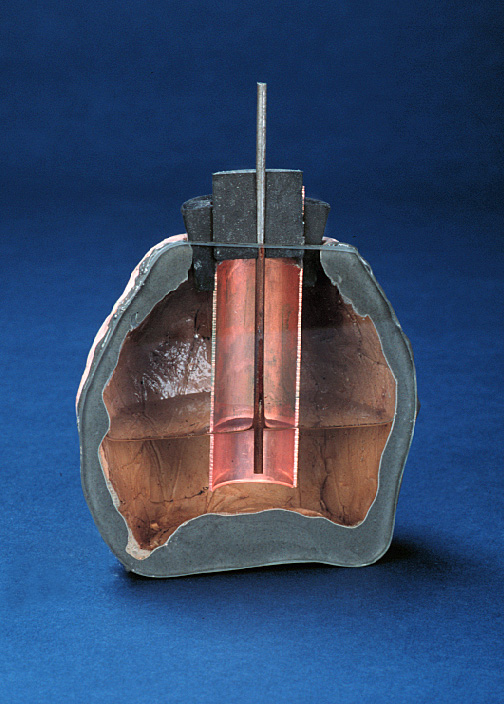
That looks somewhat like the Tardis conducting a symphony!

Lmao I was thinking TARDIS at a ball game! :rofl:
that blimp was one big hydrogen fuel cell. so is a hydrogen bomb. they're plenty safe until they explode.
The mechanics of hydrogen ignition (which is one theory of the Hindenberg disaster) and hydrogen bombs (modern nuclear weapons) are in no way comparable.
Hydrogen ignition is the reaction of hydrogen with atmospheric oxygen to produce water and heat. The Apollo missions were powered by hydrogen fuel cells based on this concept. I believe that it's still used in modern spaceflight, but I'm too lazy to check.
Hydrogen bombs are a momentary, uncontrolled unleashing of what happens continuously in the sun's core. Isotopes of hydrogen nuclei smash together at extremely high velocities (as in significant fractions of the speed of light), and excess neutrons are converted to energy. This fusion requires extremely high temperatures and pressures. You simply cannot "accidentally" start this with an ordinary chemical reaction (as in hydrogen ignition above). The requirements are far too great. In nuclear weapons it's usually started with a uranium/plutonium fission reaction. These reactions do not occur naturally on this planet.
Nuclear batteries actually wouldn't be too bad. The scientific instruments left on the moon (or, in the case of Apollo 13, meant to be left on the moon) use batteries that power their components through radioactive decay. Those devices still function today, over 40 years later. Your smoke detector uses a small amount of radioactive americium to function.

jefboyardee
Extreme Android User
Natural lightning is DC though isn't it?
No. Us humans developed direct current. All light theretofore, actually all electrical current, was alternating.
^Lightning, not lighting. 
We also developed AC.
Mother Nature had both first.
We also developed AC.
Mother Nature had both first.

Codegerm
Android Expert
Nuclear batteries actually wouldn't be too bad. The scientific instruments left on the moon (or, in the case of Apollo 13, meant to be left on the moon) use batteries that power their components through radioactive decay. Those devices still function today, over 40 years later. Your smoke detector uses a small amount of radioactive americium to function.
Nuclear batteries were also used in some pacemakers for a time. Kinda silly to put on in a 85 year old person though. Only ionization style smoke detectors have a radioactive element in them. Many of today's smoke detectors are photoelectric and do not use radioactive material.
jefboyardee
Extreme Android User
^Lightning, not lighting.
Same thing. Light is light.
We also developed AC.
Well, light was already AC, we just harnessed its powers.
Edison developed the diode which converts AC to DC, which, ironically, was the wrong thing to do with power lines. Tesla won that argument and was made into a pigeon feeder for that.

I think it would be a great idea for people who spend a lot of time camping and hiking. Not so good for the city bound especially office workers.
Same thing. Light is light.
If your house is ever struck by lightning, you might change your mind.
Well, light was already AC, we just harnessed its powers.
Edison developed the diode which converts AC to DC, which, ironically, was the wrong thing to do with power lines. Tesla won that argument and was made into a pigeon feeder for that.
Inventor of the modern battery, note the last name.
http://en.wikipedia.org/wiki/Alessandro_Volta
A DC power source was around long before Edison.
Some archeological evidence suggests that batteries were built over a thousand years ago.
http://en.wikipedia.org/wiki/Baghdad_Battery
The first power source we harnessed was DC.
What you seem to be trying to say is that light is part of the electromagnetic spectrum.
That's true.
It's also true that electrons and photons are cousins.
We give specific names to various bands along the electromagnetic spectrum - light is not the whole spectrum.
By the way, Guthrie discovered what was going on 3 years before Edison. Edison didn't steal the idea, independent discoveries happen.
The first Edison dynamos didn't use diodes, they used commutators.
http://edisontechcenter.org/generators.html
Hope this helps!

http://en.wikipedia.org/wiki/Diode
jefboyardee
Extreme Android User
I didn’t say Edison invented anything; developed is a different thing. I think his real talent was making people think he was doing the inventing.

Edison developed the diode which converts AC to DC, which, ironically, was the wrong thing to do with power lines. Tesla won that argument and was made into a pigeon feeder for that.
Not these days apparently though...
High-voltage direct current - Wikipedia, the free encyclopedia
Welcome to State Grid Corporation of China_Xiangjiaba-Shanghai +/-800 kV UHV DC Transmission Pilot Project
Obviously there won't be DC mains into your home, but for long distance transmission it can have it's benefits.
jefboyardee
Extreme Android User
Obviously there won't be DC mains into your home, but for long distance transmission it can have it's benefits.
Edison was pushing DC for powering cities and the homes therein, Tesla was pushing AC. But DC loses its charge as distance increases, making it useless for the above. But that was then... who knows what
Wasn't Edison basically a patent troll of his day?
Patent US181613 - Improvement in electric lights - Google Patents
Patent troll - Wikipedia, the free encyclopedia
"For example, a search by Thomas Edison uncovered a prior patent by two Canadian inventors, Henry Woodward and Mathew Evans for carbon filament in a non-oxidizing environment, (U.S. Patent 181,613), the type of light bulb Edison wanted to develop. Edison bought the patent for US$5,000 ($120,948 in present-day terms[41]) to eliminate the possibility of a later challenge by Woodward and Evans."
That's not patent trolling.
If Woodward and Evans let him him go on, and then sought to punish him for being successful, that would have been patent trolling.
Had Edison gone on to sue others by bending the definitions of the claims in that patent, that would have been patent trolling.
Edison did far more than develop things, he invented quite a bit.
But inventions tend to cost money, whereas developing them is profitable if you know what you're doing.
DC electricity doesn't lose charge over distance.
The term is energy and the problem is being able to change wire gauges as you go along without having voltage changes corresponding to changes in wire resistance.
That's easy to solve with AC because with AC you can use transformers.
Btw - inductive charging, mentioned earlier, uses transformers.
As for high voltage DC power (HVDC), Sweden has used it continously since the mid 50s to send power to Gotland Island.
HVDC is electrically more efficient than HVAC and can bus roughly double the maximum voltage of AC.
Edison was pushing DC for powering cities and the homes therein, Tesla was pushing AC. But DC loses its charge as distance increases, making it useless for the above. But that was then... who knows what’s coming up.
As I understand things at the moment, HVDC is actually more efficient for long distance power transmission, because there's no inductive or capacitive losses to deal with, with DC any losses are purely resistive. Also higher the voltage there's less current for a given amount of power. That's why they're pushing towards million volts for long distance power transmission, less current means less resistive losses.
One source of loss is ohmic heating - think: electric stove.
That's compounded with AC because with AC, you don't use the whole cross-section of the conductor. At very high frequencies (not power distribution), the entire signal will only be transmitted near the skin of the wiring - and never at the core, regardless of frequency.
I don't know if they'll hit a million volt HVDC lines - that's asking a lot of the insulators but you never know.
I decided to see if Google was my friend on this, in addition to that youtube, there's -
High-voltage direct current - Wikipedia, the free encyclopedia
http://www05.abb.com/global/scot/sc...5d6844da0b67c125707000363e93/$File/802pdf.pdf
~~~~~~~~~
Anyway - for many of us, solar panels on a phone could make a lot of sense if they could increase efficiency and not get embroiled in patent wars.
Semiconductors (computer chips) all operate at DC and batteries do too, which is probably how we got here.
That's compounded with AC because with AC, you don't use the whole cross-section of the conductor. At very high frequencies (not power distribution), the entire signal will only be transmitted near the skin of the wiring - and never at the core, regardless of frequency.
I don't know if they'll hit a million volt HVDC lines - that's asking a lot of the insulators but you never know.
I decided to see if Google was my friend on this, in addition to that youtube, there's -
High-voltage direct current - Wikipedia, the free encyclopedia
http://www05.abb.com/global/scot/sc...5d6844da0b67c125707000363e93/$File/802pdf.pdf
~~~~~~~~~
Anyway - for many of us, solar panels on a phone could make a lot of sense if they could increase efficiency and not get embroiled in patent wars.
Semiconductors (computer chips) all operate at DC and batteries do too, which is probably how we got here.

nickdalzell
Extreme Android User
Didn't Nikola Tesla develop a method of wireless charging or some type of wireless electrical transfer? that was what i was referring to re: wireless charging. i think it's a big misnomer to call those charging mats 'wireless'. they still have a wire that requires an electrical outlet just as any normal phone charger, only now you've increased its bulk and took up more space--also, if you pick the phone up while it's on the mat, the charging stops, much like pulling the microUSB plug from your phone. In essence, the large mat is nothing more than a cordless phone charging stand that was used in the 1990s. only made larger.
HOWEVER, if you can make those mats create a small truly wireless field near the base, where your phone will charge so long as it's within ~10ft of the mat, then you might have something. that seems at least feasible.
HOWEVER, if you can make those mats create a small truly wireless field near the base, where your phone will charge so long as it's within ~10ft of the mat, then you might have something. that seems at least feasible.
As I said earlier -
As for Tesla, you're referring to -
http://www.teslasociety.com/tesla_tower.htm
This covers the subject fairly and in a straightforward manner -
http://electronics.howstuffworks.com/everyday-tech/wireless-power.htm
You'll notice MIT experimenting with what you desire. Costs and other issues will remain to be seen.
Many of the links at the end of article are quite good.
Wireless charging requires a constantly changing field - in other words, what you get from AC.
A field from DC is just a magnet, doesn't transfer power.
The greater the distance, the greater the power transfer required, the higher the required flux.
Whether the fields in question would be harmful or not comes down to ionizing vs non-ionizing radiation, total field strength and at levels below all of that, whether medical appliances such as pacemakers are involved.
Maybe see http://en.wikipedia.org/wiki/Inductive_charging
That leaves inductive charging and then we hit the rules about power squaring and distance as well as frequency.
As for Tesla, you're referring to -
http://www.teslasociety.com/tesla_tower.htm
This covers the subject fairly and in a straightforward manner -
http://electronics.howstuffworks.com/everyday-tech/wireless-power.htm
You'll notice MIT experimenting with what you desire. Costs and other issues will remain to be seen.
Many of the links at the end of article are quite good.
phone sitting in the sun... is not a good idea.
if they can incorporate the charging panel under the main screen.. when it is in sleep mode.
and letting it sit on your desk or where ever it normally sits now.
in sleep mode.. charging from the room's normal light (whatever the source).
would be a good idea.
this would give you a small charge.. but help the phone last longer through the day.
and when the phone actually dies.. and you can not get to a charging location.
at least you have an option to get some charge back.. so you can make a call.
example.. out camping for a few days
if they can incorporate the charging panel under the main screen.. when it is in sleep mode.
and letting it sit on your desk or where ever it normally sits now.
in sleep mode.. charging from the room's normal light (whatever the source).
would be a good idea.
this would give you a small charge.. but help the phone last longer through the day.
and when the phone actually dies.. and you can not get to a charging location.
at least you have an option to get some charge back.. so you can make a call.
example.. out camping for a few days

sfbloodbrother
Extreme Android User
I want to see this on Tablets, and laptops. We may have to never charge again.
Codegerm
Android Expert
I want to see this on Tablets, and laptops. We may have to never charge again.
A friend of mine has a solar charger for his laptop. It is good for boosting the battery when the thing is off, but by no means does it kick out enough power to run the laptop.