Just throwing some rudimentary calculations out there for the sake of boredom. Please ignore the wild assumptions, vague numbers used and educated guesses - It's the final point that matters, it isn't meant to be singularly accurate.

If we assume air resistance is negligible at such low velocities over such a short distance, then following a simple equation of motion under gravity the phone was moving at a little over 3 metres per second upon impact. On impact it would have decelerated (I'll assume its velocity changed to 0 for simplicity) over a very short time, probably about 0.1 seconds or there abouts, and since accelleration is change in velocity over time, that gives a decelleration of a little over 30 metres per second. Force is equal to mass times accelleration, and as the desire weighs about 0.135kg, that gives a little over 4 newtons of force exerted on impact. Pressure is equal to force over area in metres squared, and as the original poster said it was dropped on the corner of an object, I'll stick an arbitrary figure of 2 square millimetres in, or 0.000,002 metres squared. Doing the final calculation, it comes out with an approximate pressure on the screen of...
...2 million pascals, or at least in that kind of order of magnitude. Now have some pity on the poor glass, and don't blame it for breaking!



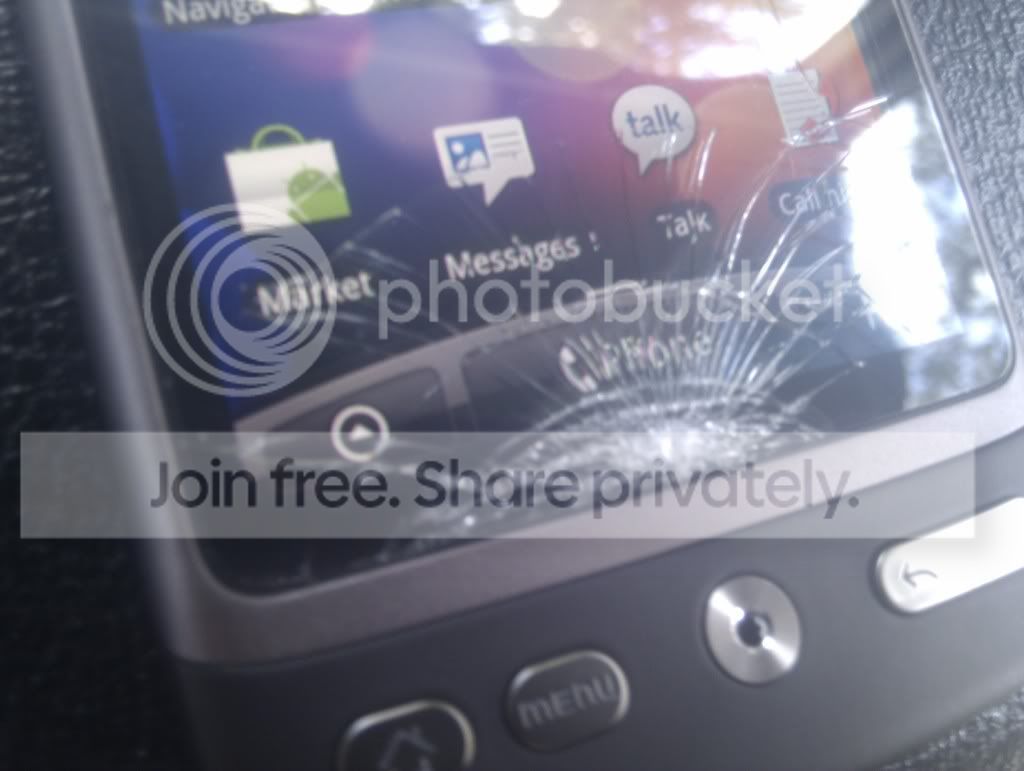
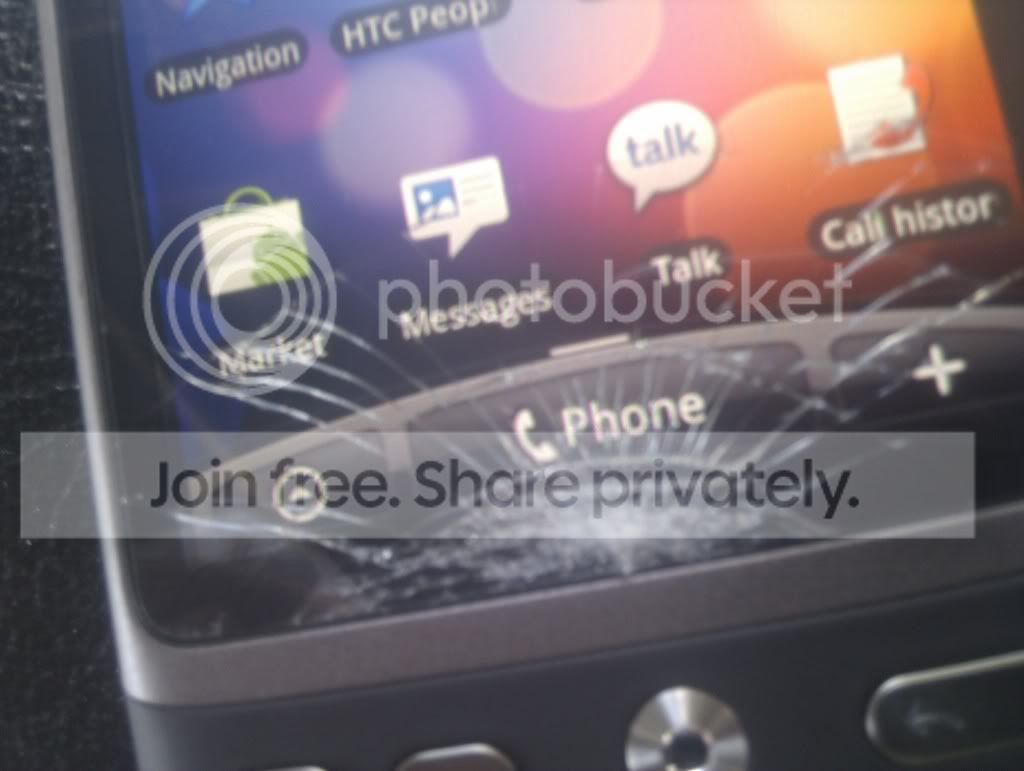


 OrangeCare exchanged it next day, saying that people drop their smartphones all the time.


 - and it still happened, so there.....

